UV degrades Dacron at 1 % tensile loss per 100 hours of direct sun.
A fitted mainsail cover blocks 98 % of UVA/UVB.
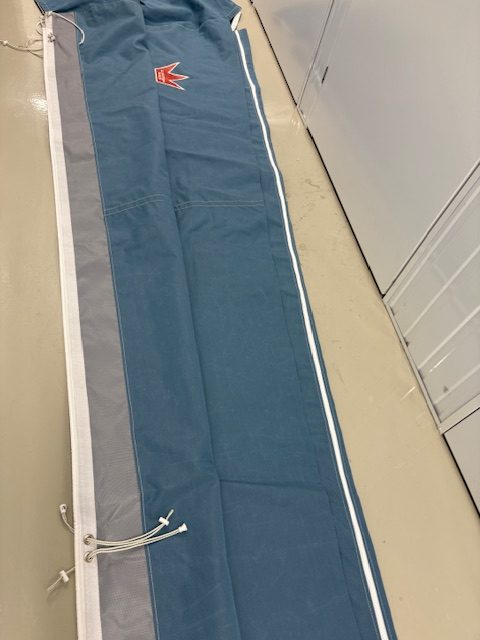
Salt crystals left on furling headsails act like sandpaper; a UV strip prevents chafe.
Helm and winch covers stop fade, corrosion and frozen bearings.
Stack Pack
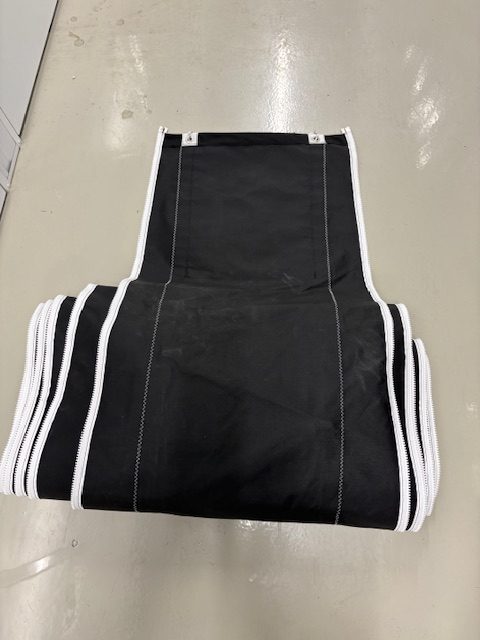
– Integrated lazy-jacks + zip-top cover
– Drops the sail into a tidy bag; no flaking required
– Sunbrella, Weathermax or recycled sailcloth outer; Tenara thread
– Sizing: P + 0.6 m length × boom E + 0.4 m width
Traditional flap cover
– Wraps the furled or flaked main, secures with twists or common-sense fasteners
– Cheaper, lighter, but needs crew on boom to fit
7–9 oz acrylic (Sunbrella) or polyester (Odyssey) sewn to leech and foot of furling genoas/jibs
Width: 10–12 % of LP (e.g. 1.4 m on a 140 % genoa)
Reversible port/starboard colours for even wear
Replace every 4–6 years before stitches fail
Wheel / pedestal cover
– Elastic or draw-cord; 60–120 cm diameter
– Fleece-lined options stop leather wheels cracking
Winch covers
– 150–300 mm height; numbered for quick ID
– Drain eyelets prevent ponding
Tiller cover – tapered tube, 1.2–2 m
Companionway spray dodger – roll-up or fixed
Sail ties – 6 mm Dyneema webbing, 0.8–1.5 m lengths
Mesh hatch covers – stop bugs, allow airflow
Mainsail cover
– P (black band to boom) + 60 cm
– E (boom length) + 40 cm
UV strip
– Measure foot and leech of furled sail; add 5ake 10 cm turn-under
Winch covers
– Drum diameter + 20 mm; height to top of self-tailer
Wheel cover
– Outside rim diameter ÷ π = fabric width
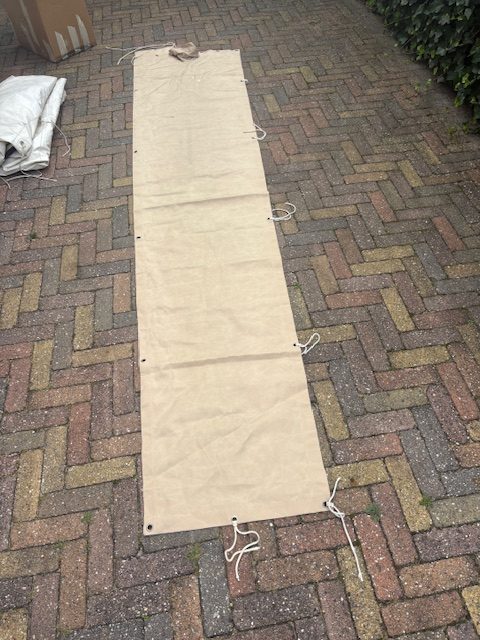
Faded covers still hold 70 % of their strength. Resail harvests them for:
Each cover diverted = 2–4 m² of marine acrylic kept in service.
Send photos + measurements to info@resail.org.