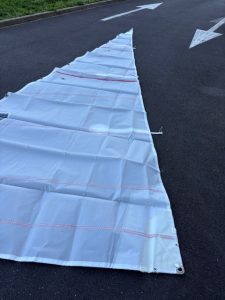
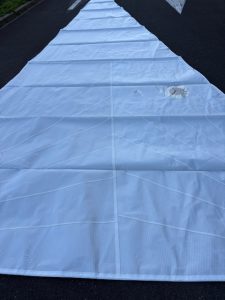
Definition and key measurements
The jib fills the foretriangle forward of the mast without crossing the mast centerline.
Standard dimensions:
I = forestay height (deck to hounds)
J = foretriangle base (mast to stem)
LP = perpendicular distance from luff to clew (≤ 100 %)
Area = (I × J × LP%) ÷ 2
Luff type: wire, rope or foil
Jib categories
Working jib
LP 90–100 %
Versatile all-round sail for 10–20 kn
Cross-cut Dacron 6.5–8 oz
Hanks or furling foil
Moderate draft for balanced helm
Blade jib
LP 70–90 %
Flat cut for 20–30 kn and choppy water
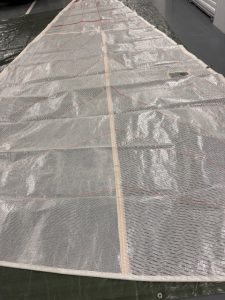
Tri-radial laminate or 8–9 oz Dacron
Reduces heel and weather helm on fin-keel boats
Standard on performance cruisers 35–45 ft
Heavy-weather jib
LP 85–95 %
Built for 25–35 kn; replaces partially furled genoa
9–10 oz Dacron or hydranet radial
Foam luff pad for shape when reefed
Hanked on inner forestay or roller-reefed
Storm jib
LP < 40 %; high-visibility orange
9–11 oz Dacron, triple-stitched
Hanked on removable inner stay; never furled
Required for World Sailing OSR Category 0/1
Area ≈ 5–7 % of rated mainsail
Selection criteria
- Measure I and J from rig plan or tape.
- Match LP to wind range:
- Coastal cruising → 95 % working jib
- Offshore passage → 85 % blade + storm jib
- Club racing → 70 % blade + #3
- Crew preference: hanks for reliability, furling for convenience.
- Cloth weight: increase 1 oz per 10 ft LOA above 30 ft.
Maintenance protocol
- Rinse with fresh water after every sail.
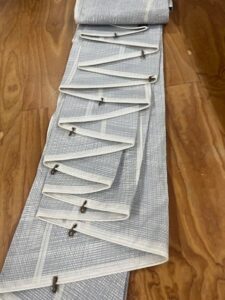
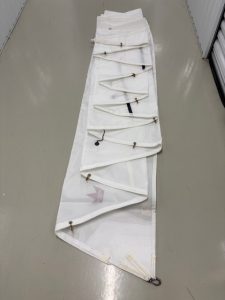
- Flake zigzag; avoid hard creases on battens.
- UV strip facing sun when furled.
- Inspect hanks, telltales and seam chafe monthly.
- Replace UV strip every 4 years.
End-of-life upcycling
When stretch exceeds 15 % or UV damage penetrates the resin, retire the jib. Resail harvests panels for:
- 25 L day-sail backpacks with original hanks
- Padded winch handle sleeves
- Waterproof chart cases (8,000 mm HH)
- Reversible cockpit cushions
Procurement and upcycling
Send I and J measurements to info@resail.org for a matched second-hand jib or to schedule free collection of your retired sail. Every exchange keeps 8 m² of performance cloth in circulation.


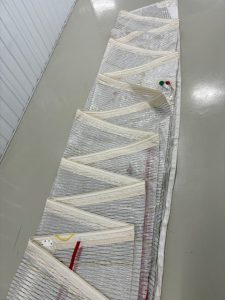
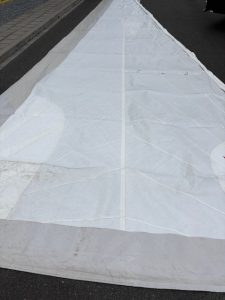
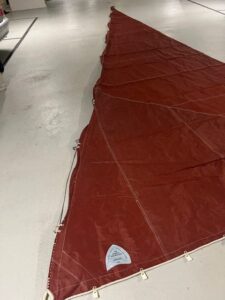
 Sail Area: 22.6m2
 Luff: 11.75m
 Foot: 4.17m
 Leech: 10.68m