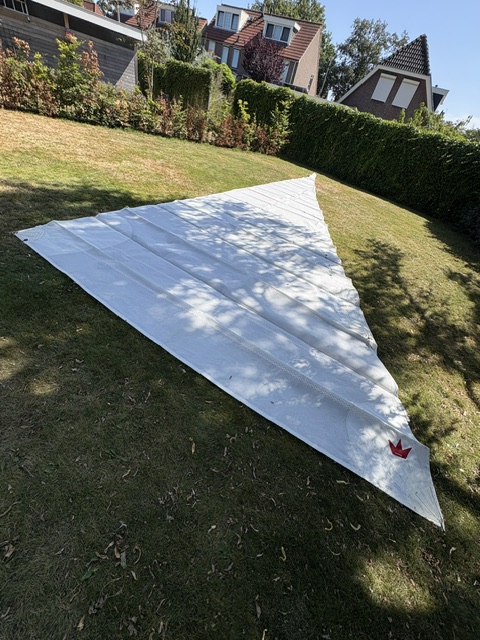
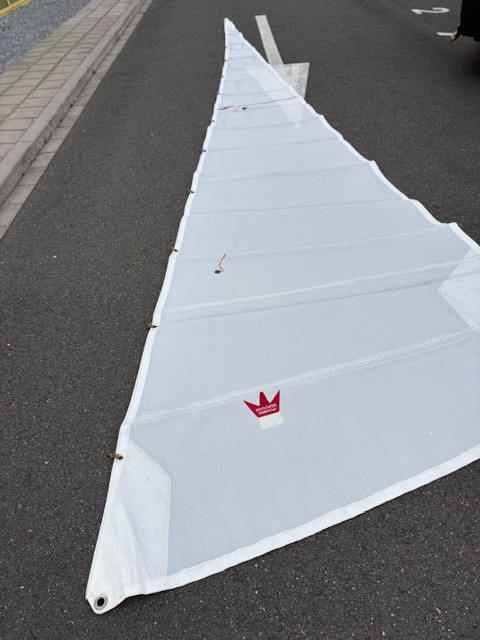
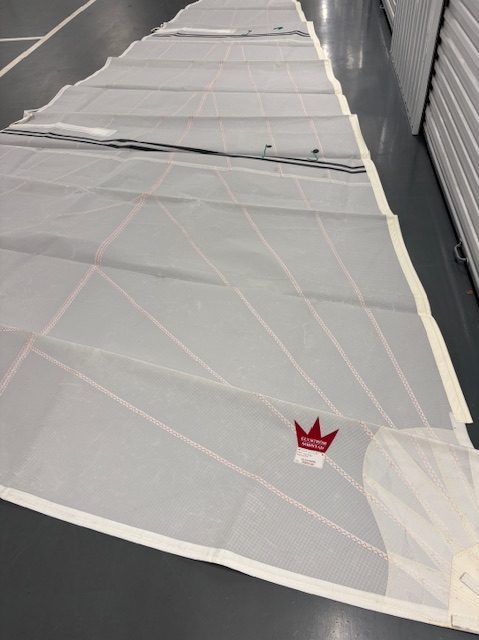
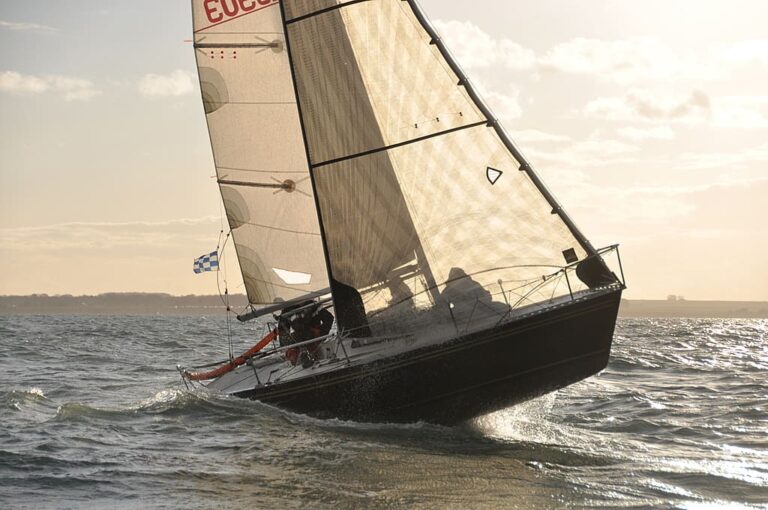
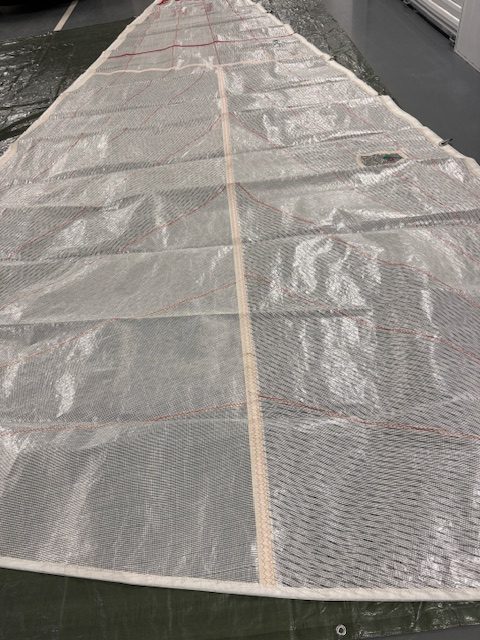
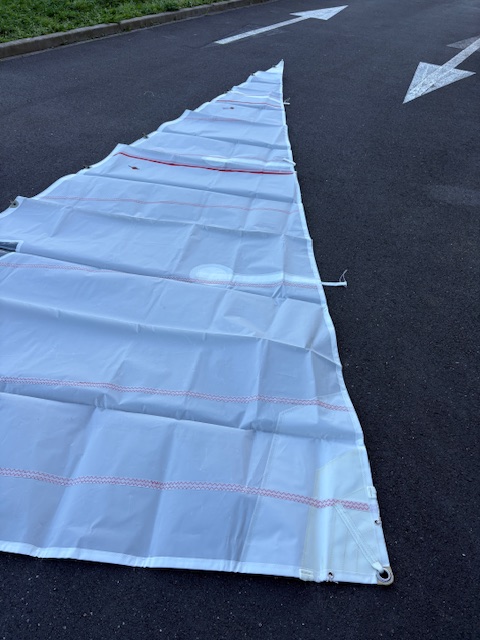
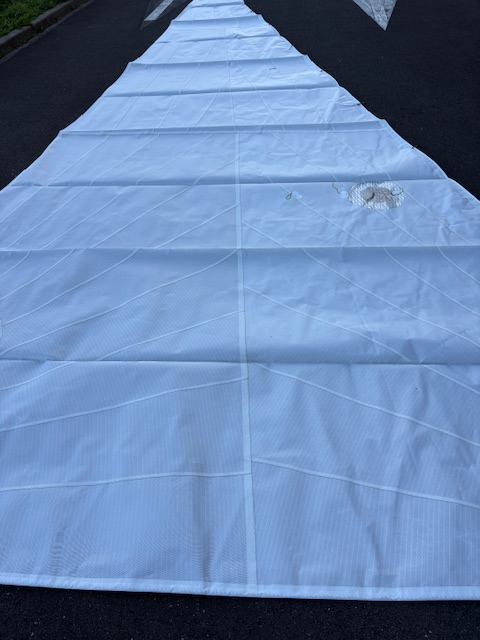
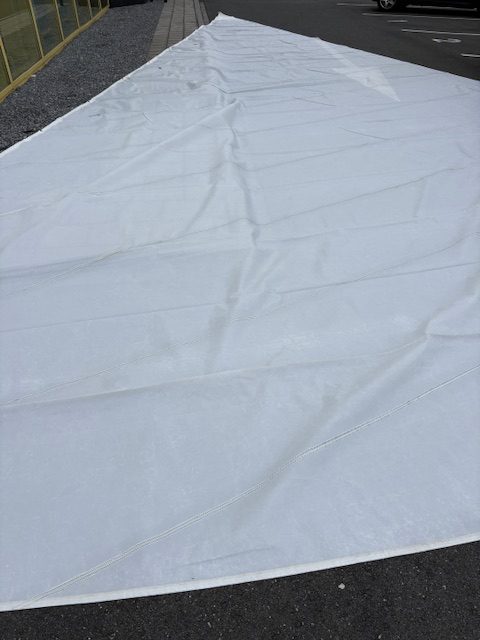
The headsail occupies the foretriangle bounded by the forestay, mast and deck. It operates in undisturbed airflow and contributes 40–60 % of total drive on most sloops. Key measurements are:
I = height of foretriangle (forestay attachment to deck)
J = base of foretriangle (mast to stem fitting)
LP = luff perpendicular (perpendicular distance from luff to clew)
Sail area = (I × J × LP%) / 2
LP ≤ 100 %
Non-overlapping; clew clears the mast
Optimal wind range: 15–25 kn
Common on performance boats and short-handed cruisers
Blade jibs (70–90 % LP) excel in heavy air and chop
LP 110–155 %
Overlaps the mast; large projected area for light air
Sub-divisions:
– #1 genoa (130–155 %) – 5–12 kn
– #2 genoa (110–130 %) – 12–18 kn
Roller-reefing genoas include foam luff pads for shape retention when partially furled
Set on an inner forestay (typically 60–80 % LP)
Lowers centre of effort in 30+ kn conditions
Often self-tending with a club or boom
Standard heavy-weather combination: double-reefed main + staysail
LP < 40 %; high-visibility orange
Constructed from 9–11 oz Dacron or equivalent
Hanked on removable inner stay; never furled
Required equipment for Category 0/1 offshore races (World Sailing OSR 4.26)
Measure I and J from rig plan or physical tape.
Match LP to local wind statistics:
– Inland lakes → 135–150 % genoa
– Coastal → 95 % blade jib + staysail
– Tradewind routes → 120 % genoa + storm jib
Choose attachment: roller furling (convenience) or hanks (durability).
Cloth: cross-cut Dacron (cruising), tri-radial laminate (racing), recycled sailcloth (Resail).
Rinse with fresh water after each sail.
Flake in zigzag folds to prevent permanent creases.
Store with UV protection strip facing outward when furled.
Inspect monthly: seams, hanks, telltales, chafe points.
When UV degradation or stretch exceeds 15 %, the sail is no longer efficient. Landfill disposal is unnecessary. Resail collects retired headsails and repurposes the panels into:
Waterproof duffel bags (40–60 L)
Toiletry kits with original sail numbers
Roll-top dry bags rated to 10,000 mm hydrostatic head
Each product retains original reef patches, telltales and insignia, providing traceability to the sail’s racing history.
Contact Resail at info@resail.org with rig dimensions for a matched second-hand headsail or to schedule collection of your retired sail. Every transaction diverts 8–12 m² of technical fabric from waste streams.