Downwindsail

Downwind sail guide: spinnaker selection and specifications

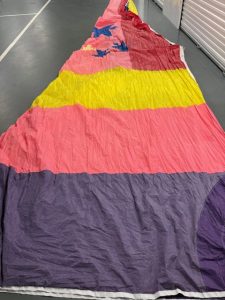
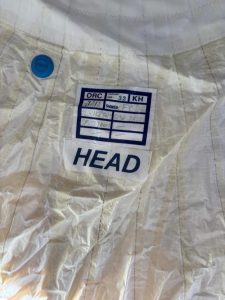
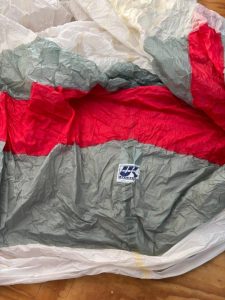
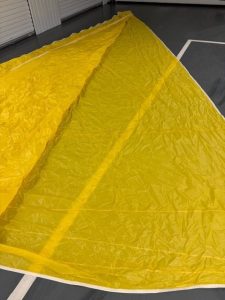
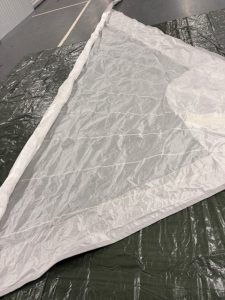
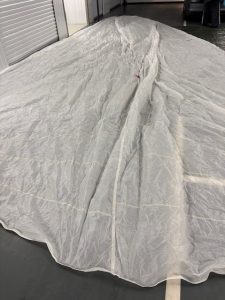
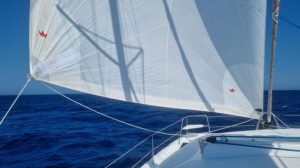
A downwind sail is a large, lightweight sail deployed forward of the forestay to maximize drive when sailing at apparent wind angles below 90°. At Resail, we specialize in spinnakers—the most versatile and widely used downwind sail. This page covers the two core spinnaker configurations—symmetric and asymmetric—along with measurements, rigging requirements, material specifications and end-of-life upcycling options.

Function of a downwind sail

The downwind sail replaces the working headsail and mainsail combination on broad reaches and runs. It projects significantly more area into clean air, increasing boat speed by 30–100 % compared to white-sail configurations. Key performance parameters:

  • AWA (apparent wind angle): 80°–180°
  • VMG (velocity made good): optimized at 120°–150° true
  • Projected area: 160–220 % of the foretriangle
  • Stability: dependent on cut, cloth weight and crew trim

Downwind sail types: spinnakers

Resail offers only spinnakers—the proven standard for recreational and racing sailors seeking reliable downwind performance.

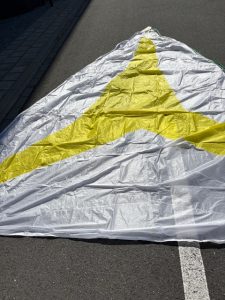
Symmetric spinnaker

  • Equal luff lengths; pole required on both gybes
  • SL ≈ ISP (spinnaker halyard height)
  • SF ≈ 1.8 × J (foretriangle base)
  • SMG ≥ 1.8 × J (IRC/ORC compliance)
  • Cloth: 0.5–2.2 oz ripstop nylon, radial or tri-radial panel layout
  • Wind range: 5–30 kn (code-dependent)
  • Rigging: spinnaker pole, uphaul, downhaul, twin sheets/guys

Asymmetric spinnaker

  • Fixed tack point; flown from bowsprit or stem fitting
  • Luff length 5–15 % longer than symmetric equivalent
  • SMG 70–85 % of foot
  • Cloth: 0.7–1.8 oz nylon or Airx polyester
  • Wind range: 6–28 kn
  • Rigging: tack line, two sheets, optional top-down furler


Selection criteria for your downwind sail

Measure ISP and J from rig documentation or physical tape.

Match spinnaker code to conditions:

Light air / reaching → 0.5–0.75 oz (S0/A1)

All-purpose running → 1.5 oz (A2)

Heavy air → 2.2 oz (S4/A4)


Crew capability: symmetric requires pole work; asymmetric suits short-handed crews.

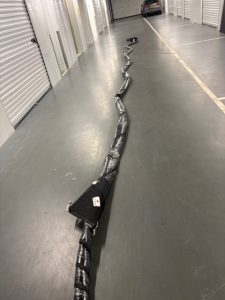
Storage: both pack into turtles; asymmetric generally more compact when furled.

Maintenance protocol

  • Rinse thoroughly with fresh water after each use.
  • Dry completely before packing to prevent mildew.
  • Store in a dedicated spinnaker turtle, elevated off the cabin sole.
  • Inspect corner reinforcements, radial patches and leech tapes monthly.
  • Limit UV exposure to 80 hours per season.

End-of-life upcycling for downwind sails

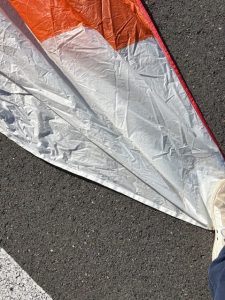
When a spinnaker exceeds 25 % stretch or suffers irreversible colour fade, it is retired from active duty. Resail repurposes the high-performance nylon into durable, lightweight products:

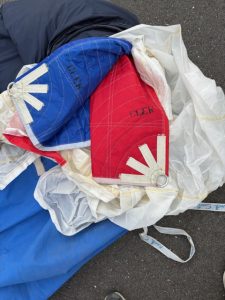
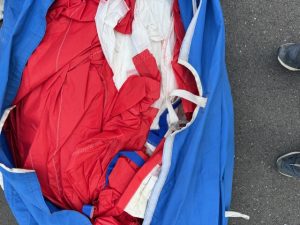
  • 60 L expedition duffels with original corner rings and sail numbers
  • Spinnaker-cloth wind scoops for tropical anchorages
  • Ultralight, packable beach rolls (5,000 mm hydrostatic head)
  • Double-layer hammocks rated to 180 kg

Each retired downwind sail diverts 25–45 m² of ripstop nylon from landfill.Procurement and upcycling

Send your ISP and J measurements to info@resail.org to receive a matched second-hand spinnaker within 48 hours. Alternatively, request a free collection label to send us your retired downwind sail. Every transaction keeps 30 m² of performance fabric in active circulation.